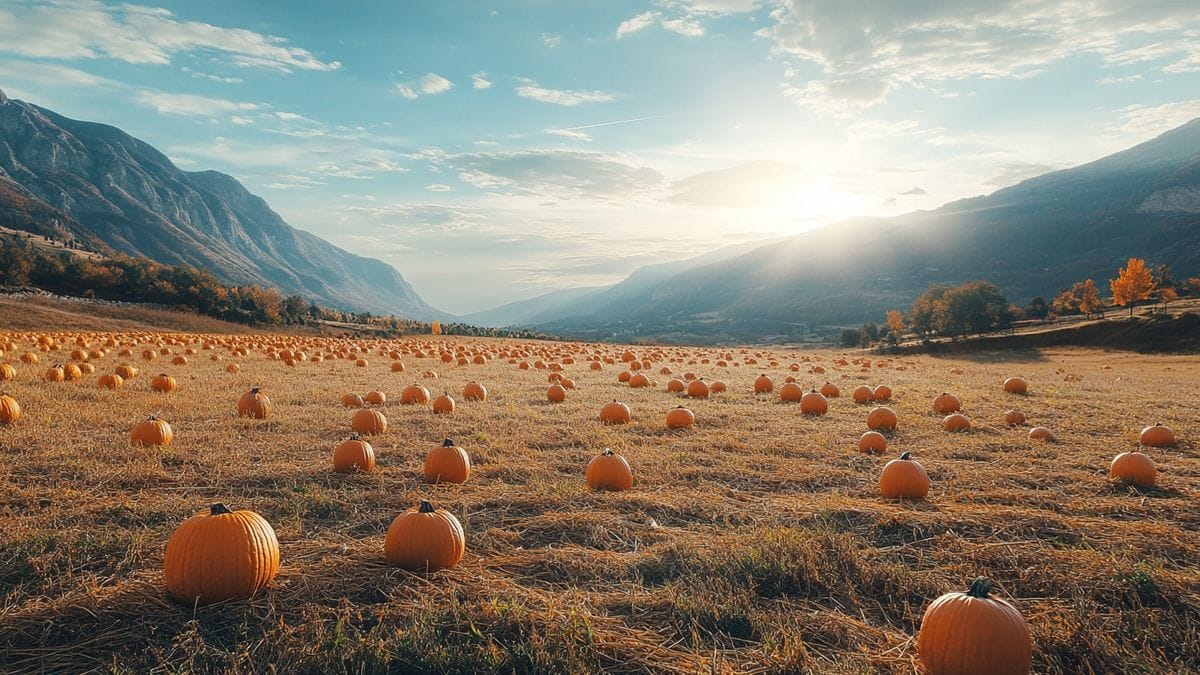

As Halloween approaches, pumpkins make their grand entrance into the décor of the Alpes-Maritimes. But behind their friendly appearance lies a story that touches on the biodiversity of the region. Primarily originating from the United States, these colorful vegetables began to establish themselves in the French landscape in the 1990s, sparking interest and curiosity. This phenomenon, which has now lasted for three decades, raises questions about the consequences of this invasion on our local environment.
A significant arrival in the 90s
One does not have to look far back in time to understand how this trend became established. The 1990s saw the emergence of Halloween in France, and with it, a certain fascination for the pumpkin. In 1994, this holiday made its appearance on the Côte d’Azur, offering an ideal platform to promote the famous vegetable. Pumpkins quickly took center stage, beautifying gardens and catching the eyes of passersby, becoming almost indispensable every autumn.
Pumpkins and biodiversity: an unbalanced fight
Although pumpkins are often celebrated for their festive role, their integration into local ecosystems is not without consequences. Indeed, their rapid growth and ability to adapt to Mediterranean climates have allowed them to outpace other species, often to the detriment of biodiversity. Farmers, while benefiting from this new lucrative crop, sometimes find themselves caught in a dilemma: to favor this invasive species or to protect the less competitive local varieties.
Pumpkins, a symbol of consumption
The growing popularity of pumpkins in the Alpes-Maritimes has also led to a genuine craze for derivative products. Local markets now offer not only pumpkins intended for decoration but also a multitude of culinary preparations ranging from soups to desserts. This enthusiasm has reinforced the image of the pumpkin as a “locavore” product, but it should be noted that this dynamic can mask a more complex reality, that of monoculture and the advent of unsustainable agricultural practices.
An evolving popular tradition
As the number of consumers increases, the traditions related to pumpkin harvesting are transforming. Festive events filled with colorful costumes organized around this season are an integral part of local culture. It is fascinating to see how a simple American-inspired holiday has taken root in the Alpes-Maritimes, feeding both the collective imagination and agricultural practices. As Halloween approaches, it is good to reflect on how this tradition can coexist with the necessary respect for our environment.
From love for pumpkins to the preservation of sustainable agricultural practices, three decades of invasion have revealed a spectacle where pumpkins flourish and consciousnesses are questioned. The phenomenon, rich in lessons, invites everyone to engage with biodiversity and rethink our relationship with nature. The Alpes-Maritimes are thus transforming, not only through the vibrant colors of pumpkins but also through a collective reflection on the footprint these crops leave on our land. In this dance between tradition and modernity, Halloween becomes a symbolic act of our connection with the environment while reminding us of the challenges that surround it.