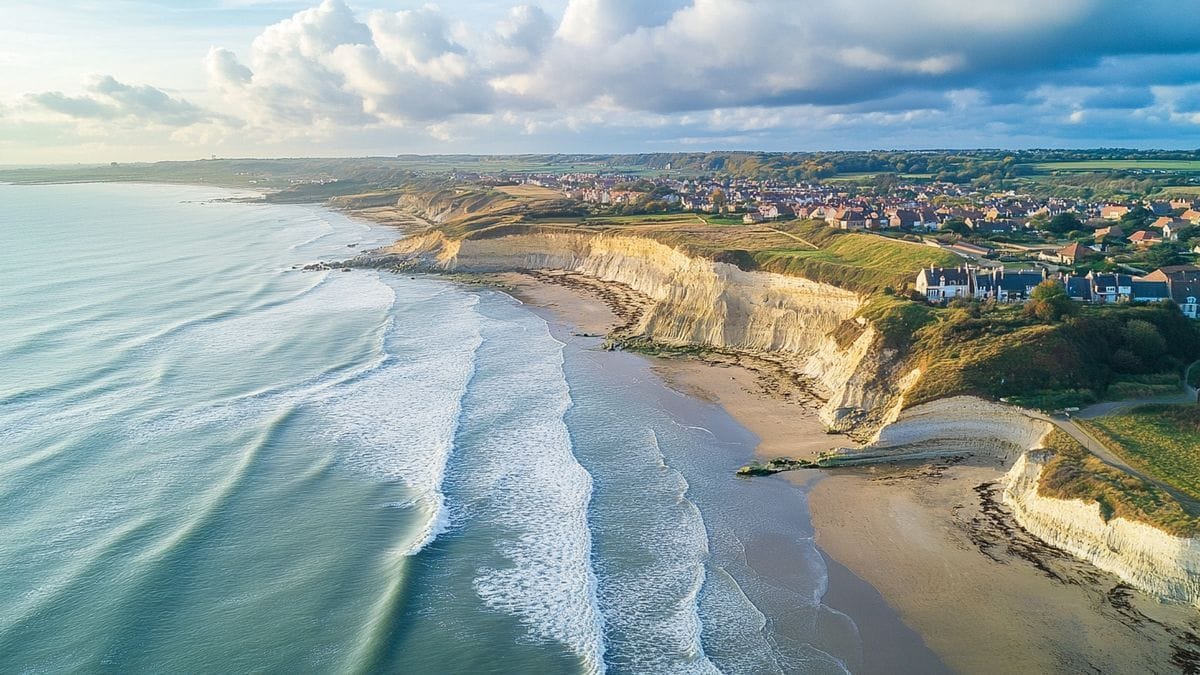

The seaside resort of Soulac-sur-Mer, nestled on the beautiful Atlantic coast, faces a cruel uncertain future as rising waters and coastal erosion threaten its very existence. Having become emblematic of the fight against the effects of climate change, this town questions how to preserve its cultural, economic, and natural heritage in the face of an ocean of challenges.
A threatened waterfront
In the heart of Nouvelle-Aquitaine, Soulac-sur-Mer is a popular seaside resort that attracts thousands of visitors each year thanks to its fine sandy beaches and characteristic ambiance. However, the coastal retreat threatens this fragile ecosystem. Increasingly frequent storms and episodes of rising waters contribute to accelerated erosion, averaging 4 meters per year. This trend is alarming and raises questions about the survival of this resort.
The stakes for residents
Residents are facing a difficult reality with heart-wrenching choices to make regarding their properties. Many have homes that are now classified as being at risk, and the threat of losing everything they have built weighs heavily on their shoulders. Investments to try to protect these properties are often costly and sometimes ineffective, creating a climate of uncertainty within the community.
Consequences for tourism
Tourism, the main pillar of the local economy, is directly impacted. The reputation of Soulac-sur-Mer could suffer if the beaches continue to disappear. The dependence on this fragile economic resource highlights the urgency to act. A decrease in visitor numbers could lead to a steep decline in the local economy, with dramatic consequences for businesses, restaurateurs, and all service providers who rely on tourist foot traffic.
Ongoing initiatives and solutions
In response to this alarming situation, initiatives have been put in place to try to counteract the erosion phenomenon. Actions range from coastal recycling efforts, such as sand replenishment, to the development of more sustainable solutions, such as dune vegetation to strengthen the natural protection of the coast. These approaches also raise reflections on long-term adaptation, with an urban planning model that takes into account the continuous rise in water levels.
Future perspectives
As Soulac-sur-Mer grapples with these challenges, the question of its future remains open. Residents, local authorities, and experts are faced with the necessity of finding a balance between protecting heritage and adapting to new environmental challenges. The example of this seaside resort could well serve as a model for other coastal municipalities in the search for sustainable solutions in the face of rising waters.
Over the years, I have had the opportunity to observe the evolution of Soulac-sur-Mer, and my own experience allows me to grasp the urgency of the situation. Every summer, when I walked visitors along the beach and shared with them the history of this seaside resort, I felt a deep connection to the place. But today, this concern for its future, tinged with melancholy, accompanies me on every visit, reminding me that beneath the tourism issue lies a much larger challenge: the survival of a culture and a community in the face of nature, which often reminds us of its power in a brutal way. This prompts me to reflect on the future of the French coasts and how we can, together, preserve these jewels for generations to come.