

This Wednesday morning, a poignant scene took place in front of the hospital in Hyères, where the Rural Coordination of Var gave voice to a profession in distress. Farmers, armed with banners and strong messages, protested to demand the withdrawal of the Mercosur agreement, a symbol of a growing threat to French agriculture. By accompanying an “imaginary colleague” representing the many sufferings of their peers, these actors of the earth highlighted an alarming reality: agriculture is sick. This gathering illustrates not only the individual struggles of farmers facing increasingly precarious economic conditions but also raises a crucial question for society: how to preserve our agriculture in the face of unfair international competition and political choices that compromise its future? In a context where the mental health of farmers is more vulnerable than ever, it is imperative to listen to their calls for help and take these realities into account, both for them and for the food security of all.
This Wednesday morning, a group of about twenty farmers from the Rural Coordination of Var gathered in front of the Hyères hospital to make their voice heard in a context of deep crisis. This symbolic action is not a matter of chance but a reflection of an alarming reality: agriculture is sick. The choice of location, a hospital, illustrates how the situation of farmers is comparable to a pathology requiring emergency care.
Indeed, this gathering aimed to denounce the devastating effects of free trade agreements, particularly the Mercosur, currently under negotiation. Farmers express their concern over the unfair competition generated by these agreements, which would allow the import of low-priced agricultural products, often of inferior quality. The deterioration of working and living conditions for farmers is therefore at the forefront.
This mobilization also carried a strong message about the psychological distress felt by many farmers. Christian Rastelo, the general secretary of the union, mentioned the need to create listening spaces within administrations to support his colleagues, who face continuous pressure and must navigate an ocean of administrative difficulties when they seek help.
The situation is all the more critical as this sectorization of agricultural activities, as evidenced by losses in the horticultural basin of Hyères, jeopardizes local farms. Max Bauer, another actor in this mobilization, recalled that in 2013, there were 55 rose producers, compared to only 4 today. It is a real cry of alarm facing an aggressive competition that threatens the very foundations of regional agriculture.
The farmers of Var also wish to raise public awareness, encouraging them to become consum’actors. This notion underscores the importance of consumer responsibility in their purchasing choices since the future of French agriculture depends on the demand for local and quality products.
“Agriculture is sick!” This cry from the heart resonated this Wednesday morning in front of the hospital in Hyères, where about twenty farmers from the Rural Coordination of Var gathered to express their distress and demands. This symbolic movement was marked by a strong message: the need to withdraw from the Mercosur agreement, which threatens their profession and their future.
Key Points of the Demands:
- Withdrawal from the Mercosur agreement: Farmers demand the exit of French agriculture from this free trade agreement, considering that it will harm the quality and profitability of their productions.
- Psycho-logical distress: They emphasize the need for administrations to be aware of their mental condition, suggesting the presence of psychologists to better understand their difficulties.
- Protection of local producers: The Rural Coordination highlights the disastrous consequences of foreign competition, particularly in the horticultural basin of Hyères, where the number of rose producers has drastically decreased due to imports.
- Consumer responsibility: A call is also made to consumers to become consum’actors, urging them to question the origin and quality of the food they purchase.
Messages of Solidarity and Action
During this demonstration, members of the Rural Coordination emphasized that agriculture should no longer be treated with mere “band-aids” on deep wounds, but requires a genuine policy change to ensure its survival. They insist that without appropriate remedies, the profession could be heading towards a dire situation.
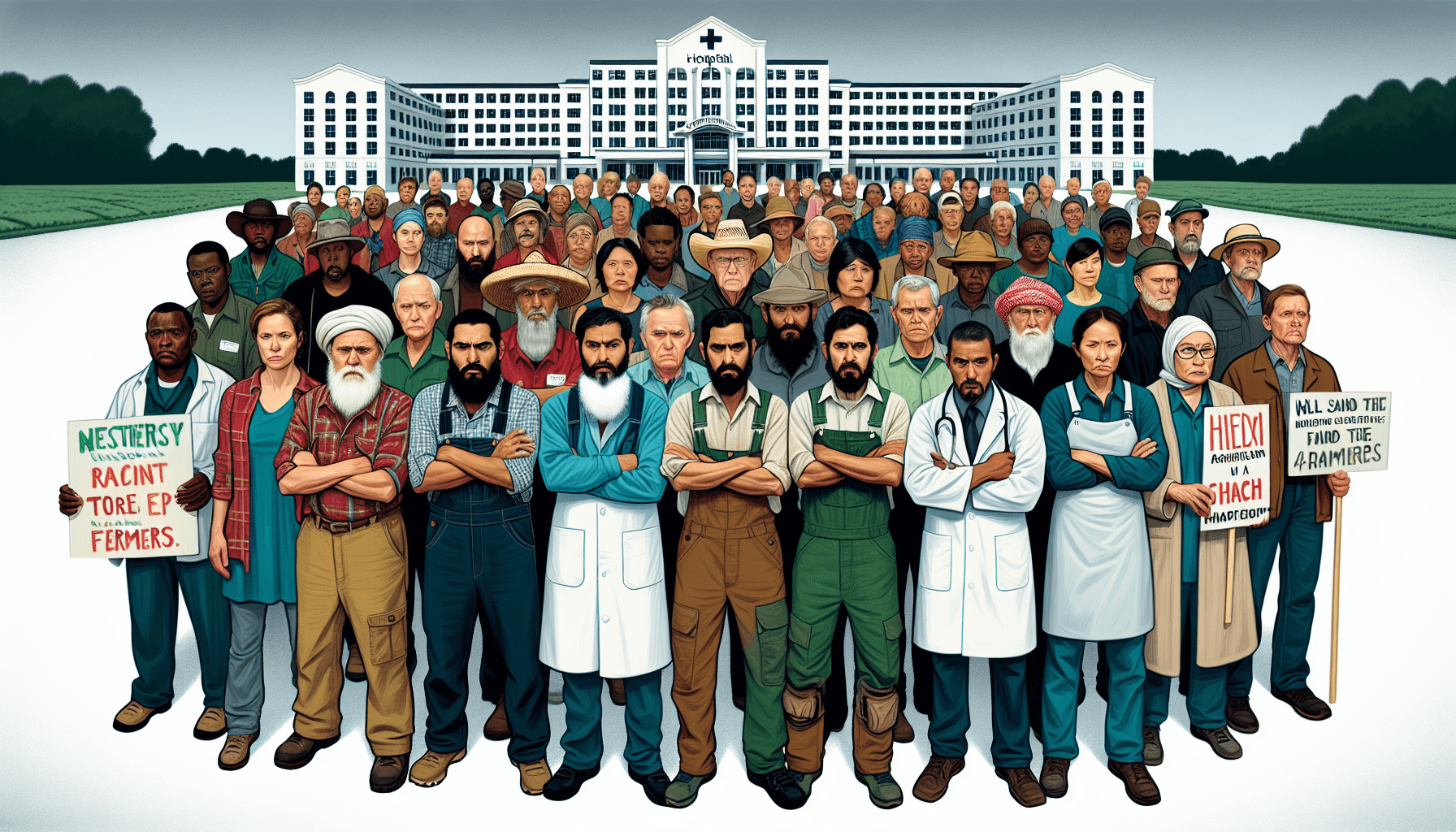
Wednesday morning, a symbolic action took place in front of the hospital in Hyères, where about twenty farmers from the Rural Coordination of Var mobilized to express the deep crisis that French agriculture is going through. This gathering, centered around the figure of Isidore, a colleague depicted as representing the suffering of farmers, has sparked varied reactions within the local population and authorities.
The farmers drew attention to their psychological distress, a reality exacerbated by government measures deemed insufficient in light of the true extent of the problems encountered in the sector. Christian Rastelo, the general secretary of the union, emphasized the urgent need for a humane approach to farmers, even suggesting that psychologists in administrations might facilitate the understanding of the issues faced by agricultural actors.
The reaction of local authorities seems mixed. Representatives from the Hyères town hall acknowledged the legitimacy of farmers’ concerns but also reminded them of the economic challenges posed by the current crisis. Some elected officials even mentioned the need for a constructive dialogue between farmers and the government to find viable solutions.
Moreover, this mobilization has not remained isolated. Other agricultural organizations and movements advocating for farmers’ rights have expressed their support for the Rural Coordination of Var. Groups committed to promoting sustainable and local agriculture have joined this fight, stressing the importance of withdrawing from these free trade agreements that endanger national production and harm the quality of food offered to consumers.
The demonstration was also relayed on social media, where many citizens, sensitive to the agricultural cause, provided their virtual support. Internet users used hashtags calling for collective reflection on food choices and their impact on the vitality of local agriculture.
“Agriculture is sick!” This is the heartfelt cry launched by the Rural Coordination of Var this Wednesday morning, as about twenty farmers symbolically gathered in front of the Hyères hospital. They intended to denounce the disastrous consequences of the ongoing Mercosur agreement negotiations.
Accompanied by a symbol, Isidore, representing the distress of many farmers, these horticulture and viticulture professionals highlighted a troubling reality. Christian Rastelo, the general secretary of the union, described agriculture as “severely ill”, insisting that current government measures are insufficient to heal the gaping wounds in the sector: “By constantly putting band-aids on gaping wounds, it can no longer heal.”
A Call for Awareness
Rastelo also mentioned the psychological distress felt by farmers, signaling the need to include psychologists in administrations to understand the extent of the suffering experienced. For the union, the true remedy lies in withdrawing French agriculture from free trade agreements, particularly the Mercosur agreement, which threatens their survival.
Max Bauer, another farmer present, shared a dramatic anecdote about horticulture: “We were 55 rose producers in 2013. Today, only 4 remain, particularly due to roses imported from Kenya.” This remark illustrates the disastrous impact of unfair competition on the local sector.
A Call for Consumer Responsibility
The mobilization of farmers is not just a simple cry of distress; it is also a call for collective responsibility. Farmers warn that the Mercosur agreement will directly affect the quality of food available to consumers: “The consumer is a consum’actor.” Therefore, everyone’s involvement is essential to ensure a sustainable future for local agriculture.
In light of this alarming situation, the Rural Coordination of Var has chosen a measured approach, rejecting violence as a means of protest, while remaining firmly determined to make their voices heard. The impact of this mobilization could potentially influence agricultural policies, creating the necessary awareness of the fragility of the current situation and laying the foundations for an established dialogue between farmers, consumers, and political decision-makers.