

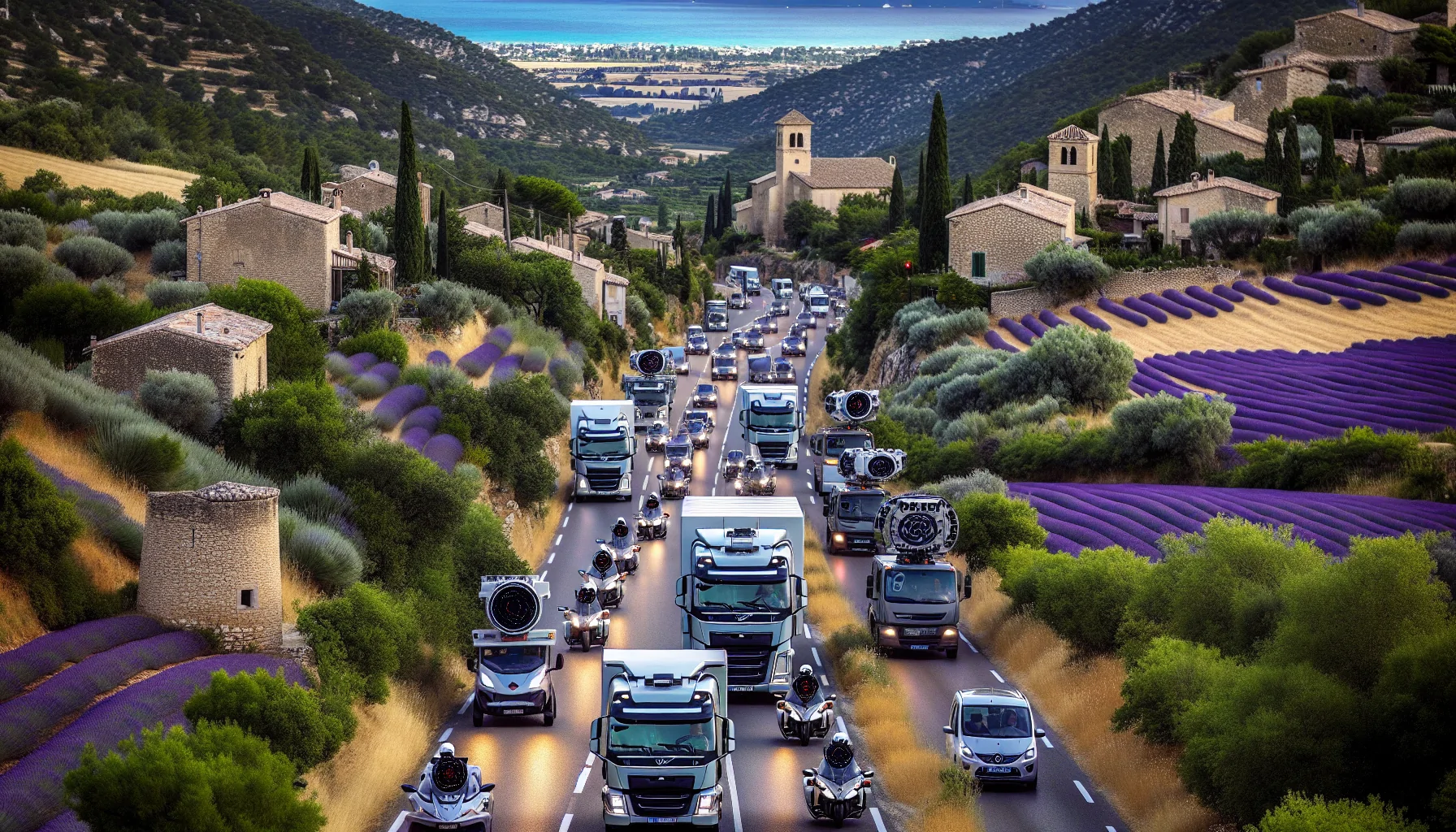
As part of the ongoing efforts to improve road safety, Provence-Alpes-Côte d’Azur is set to welcome a major innovation: the use of radar cars on its roads. Scheduled for 2025, this new measure promises to change the way we approach driving in the region, offering more dynamic and effective monitoring of driver behavior. But what impact will this have on our driving habits and, above all, on our safety? Beyond the issues of enforcement, a real change in road culture is taking shape, inviting each user to rethink their habits behind the wheel. Get ready to discover the implications of this evolution on your daily commutes and on the future of driving in the region!
In 2025, Provence-Alpes-Côte d’Azur is preparing to usher in a new era of road vigilance with the introduction of radar cars. This innovative system aims to improve safety on the roads while strengthening the fight against speeding.
How Radar Cars Work
Radar cars are unmarked vehicles equipped with cameras and electronic speed detection systems. These vehicles travel on the roads to measure the speed of the cars in front of them. Thanks to their advanced technology, they can photograph and record infractions in real-time, thereby allowing for proactive management of road safety.
Why Use Radar Cars?
The main objective of this initiative is to reduce road accidents, a crucial issue in a region where traffic is heavy and unpredictable behavior can jeopardize the safety of all. Radar cars thus allow for:
- Less distraction for drivers: Unlike fixed radars that are often ignored, these cars demonstrate greater flexibility and can appear in different locations, encouraging motorists to remain vigilant;
- Increased inspections, as they can be deployed on numerous roads, including less monitored routes where risky behaviors may occur;
- Enhanced awareness among drivers about respecting speed limits, making the road safer for all users.
Implementation in Provence-Alpes-Côte d’Azur in 2025
The implementation of radar cars in the region will involve training specific teams responsible for their deployment. These teams will work in collaboration with law enforcement to establish targeted strategies based on risk areas identified by previous accident data.
Radar cars will circulate randomly throughout all departments in the region, allowing for expanded coverage. Due to their variable presence, they will help deter dangerous driving behaviors and thus contribute to making Provence-Alpes-Côte d’Azur a region where it is pleasant to drive safely.
Road safety is a major concern in all regions of France, and particularly in Provence-Alpes-Côte d’Azur, which is often bustling with dense traffic, especially during the summer season. The introduction of radar cars in this region aims to reduce the number of road accidents by monitoring driver speed more effectively and less intrusively.
The Emergence of Radar Cars
Since their implementation in certain areas, autonomous radar cars have demonstrated their ability to detect traffic violations while moving on the roads. Departments such as Alpes-Maritimes and Var have already adopted this system. This initiative has been established to address the limitations of fixed radar systems, which are often circumvented by road users who anticipate their location.
Impact on Road Safety
Statistical studies show that the use of radar cars leads to a significant decrease in the average speed of vehicles. For example, reports indicate that a reduction of speed by 1 km/h can result in a 3% decrease in the number of accidents. In Provence-Alpes-Côte d’Azur, where speed is frequently exceeded, this data is encouraging.
Proven Examples in France
In other regions of France, such as Nouvelle-Aquitaine and Île-de-France, radar cars have already demonstrated their effectiveness. According to statistics, some departments noted a decrease of up to 20% in accidents in areas where these vehicles operate regularly. This is a strong indication that when drivers know they may encounter these vehicles at any time, they adopt a more cautious driving style.
For the Provence-Alpes-Côte d’Azur region, the installation of radar cars seems promising in terms of improving road safety and reducing accidents. With rigorous monitoring and awareness campaigns, it is foreseeable that this strategy will contribute to a safer road environment for everyone.
Public Reactions to Radar Cars
Since their introduction, radar cars have elicited varied reactions among drivers and authorities. On one hand, some motorists are appreciative, seeing these devices as a necessary safety measure on the roads. Their supporters highlight that these vehicles can help reduce the number of accidents and encourage drivers to adhere to speed limits, which gains the approval of authorities concerned with road safety.
On the other hand, many concerns have been raised. Some members of the public express fears regarding the transparency and justification of such measures, arguing that radar cars could be perceived as a tool for financial recovery rather than safety. This sentiment expressed by some drivers underscores the view that these devices are more intended to generate fines than to genuinely protect road users.
Furthermore, motorists are concerned about increased surveillance and intrusion into their privacy, a juxtaposition that fuels the debate on respecting individual freedom. For many, this raises ethical questions about how the law regulates and monitors road behaviors.
From the authorities’ perspective, it is undeniable that radar cars represent an effective tool for improving road safety. Reports often indicate a decrease in speeding violations in areas where these vehicles are present, highlighting their potential role as preventatives. Governments also argue that these measures allow for better targeting of risky behaviors by adapting interventions.
The discussions surrounding radar cars highlight a delicate balance between safety, respect for privacy, and public perception. This debate will likely continue to evolve as these technologies are integrated into the road landscape.
From February 12 to 16, all of Mandelieu-la-Napoule will be celebrating. The iconic Mimosa Festival returns for a joyful and festive new edition. The theme: “The Great Tour of the Regions”. On the agenda are concerts, parades, flower battles, and many other colorful activities…
The Children’s Carnival to Kick Off
The first major highlight is scheduled for Wednesday, February 12 at 3 PM with the carnival for children in Place de France, as stated in the newspaper Cannes Actus.
Activities and games will be on the program for the youngest, with inflatable structures and acrobatic courses. There will also be a concert in the Notre-Dame du Liban church as the official “kick-off” of the Mimosa Festival (10 euros entry).
The following day, the Miss Mandelieu election will take place at the Expo Congress Center. A special moment at the cost of 5 euros per ticket. On Valentine’s Day, February 14, head to the grand banquet enlivened by strolling artists starting at 6 PM. In the background, live music and dishes prepared by various food trucks. In the evening, there will be a fireworks display.
“Brain Olympics” to Experience With Family
A great weekend awaits you, with two very busy days on Saturday and Sunday. On the 15th, for example, we will start at 2 PM with “Brain Olympics” at the media library. A free friendly competition planned for the whole family. Be careful, as registration is required, since places are limited. At the same time, and for the rest of the afternoon, Place de France will transform into a village animated by musicians, artists, and a creators’ market.
The famous night parade will illuminate the city starting at 6:30 PM with its twelve illuminated floats that will travel from Avenue des Anciens Combattants to Place de France. An event extended until 11 PM with music and delicious offerings from restaurateurs.
The Grand Parade and Flower Battle to Conclude
Finally, to close this festive weekend, the Napoule district will also join the event with activities in the streets. But the highlight of the show will undoubtedly be the grand parade and flower battle, the much-anticipated moment of the Mimosa Festival.
Note that for the two parades, admission will be 19 euros at full price. Count 16 euros for children aged 3 to 17 and for individuals with reduced mobility. However, to keep these moments accessible to all, standing areas will be free. Reservation is also mandatory in this case.
Learn More
- Mimosa Festival in Mandelieu-la-Napoule
- From February 12 to 16, 2025
- Prices for flower parades: 19 or 16 euros, free standing areas